Chimney Repairs and Sweeping: Keeping Your Home Safe and Efficient
A well-maintained chimney is essential for the safety, efficiency, and longevity of your home’s heating system. Whether you use a fireplace, wood stove, or other chimney-connected appliance, regular chimney repairs and chimney sweeping are critical to protecting your home and family. At New England Chimney Services, we provide professional chimney services throughout Connecticut, ensuring your chimney is safe, clean, and performing at its best.
In this guide, we’ll explore the importance of chimney maintenance, common chimney problems, repair techniques, and why hiring a professional chimney sweep or mason is the smart choice.
Why Chimney Maintenance Matters
Your chimney is more than just a vent for smoke and gases—it’s a vital part of your home’s structure and heating system. Neglecting your chimney can lead to dangerous situations, including:
-
Chimney fires: Creosote buildup inside the flue is highly flammable and can ignite, causing devastating fires.
-
Carbon monoxide poisoning: Blocked or damaged chimneys can allow harmful gases to enter your home.
-
Structural damage: Water, weather, and general wear can cause cracks, crumbling mortar, and weakened bricks.
-
Decreased efficiency: A poorly maintained chimney can reduce the efficiency of your fireplace or stove, leading to higher energy costs.
Regular chimney sweeping and timely chimney repairs are essential for preventing these hazards and maintaining a safe, comfortable home environment.
Chimney Sweeping: Cleaning for Safety and Efficiency
Chimney sweeping is the process of removing soot, creosote, and other debris from your chimney flue. While it may seem simple, professional chimney sweeping is a specialized task that requires the right tools, experience, and safety precautions.
Signs Your Chimney Needs Sweeping
Even if you use your fireplace infrequently, your chimney may still require cleaning. Common signs include:
-
Dark, sooty buildup around the fireplace or stove
-
Smoke entering your living space while the fire is burning
-
A strong, unpleasant odor from the chimney
-
Visible cracks or damage inside the chimney flue
The Sweeping Process
Professional chimney sweeps use specialized brushes, vacuums, and inspection cameras to clean the entire chimney system. The process typically involves:
-
Inspection – Assessing the chimney’s condition to identify creosote buildup, blockages, and structural issues.
-
Cleaning – Removing creosote, soot, and debris from the flue, smoke chamber, and firebox.
-
Debris Removal – Ensuring that all waste is safely removed from the home, leaving your fireplace ready for use.
-
Post-Cleaning Inspection – Checking for signs of damage or deterioration that may require repair.
Professional chimney sweeping not only reduces fire risk but also improves airflow, allowing your fireplace or stove to operate more efficiently.
Common Chimney Problems That Require Repairs
Chimneys endure extreme conditions—high heat, moisture, and weather exposure—which can cause a variety of issues over time. Understanding common chimney problems can help homeowners recognize when it’s time to call a professional.
Cracked or Deteriorating Chimney Mortar
Mortar is the material that holds bricks together in your chimney. Over time, mortar can crack, crumble, or erode due to freeze-thaw cycles, water damage, or age. Damaged mortar can lead to structural instability, water infiltration, and even brick failure.
Repair options include:
-
Tuckpointing – Replacing deteriorated mortar with fresh, durable mortar to restore structural integrity.
-
Full repointing – Replacing all the mortar in a chimney that is extensively damaged.
Damaged or Loose Bricks
Bricks can become loose, cracked, or spalled (surface flaking) due to weather, water, or structural stress. Loose bricks can pose a safety hazard and allow water to penetrate the chimney structure.
Repair solutions:
-
Replacing damaged bricks
-
Repointing surrounding mortar for added stability
Chimney Cap and Crown Issues
The chimney crown is the top surface of the chimney that protects it from water infiltration, while the chimney cap keeps animals and debris out. Damage to either can result in leaks, blockages, or pest infestations.
Repair solutions:
-
Installing a new chimney cap
-
Repairing or rebuilding a damaged chimney crown
Creosote Buildup
Creosote is a byproduct of burning wood that accumulates inside the chimney. Over time, it hardens and becomes highly flammable. Excessive creosote can lead to chimney fires if not removed.
Solution:
-
Professional chimney sweeping with specialized tools to safely remove creosote
Water Damage
Water is one of the most common causes of chimney damage. Leaks can cause rusting of metal components, deterioration of bricks and mortar, and mold growth inside the home.
Repair solutions:
-
Waterproofing treatments
-
Crown repairs or rebuilding
-
Flashing replacement to prevent roof leaks
DIY vs. Professional Chimney Services
While some homeowners may consider cleaning their chimney themselves, professional chimney services in Connecticut are highly recommended. Here’s why:
-
Safety: Chimney work involves heights, confined spaces, and fire hazards. Professionals have the training and equipment to perform the job safely.
-
Expertise: Skilled chimney sweeps and masons can identify hidden problems that could be dangerous if left untreated.
-
Efficiency: Professionals complete the job faster and more thoroughly, ensuring your chimney is clean and functional.
-
Long-term savings: Regular professional maintenance prevents costly repairs down the line.
How Often Should You Sweep and Inspect Your Chimney?
The National Fire Protection Association (NFPA) recommends:
-
Annual inspection: At least once per year, even if the chimney appears clean.
-
Sweeping frequency: At least once per year for regular wood-burning fireplaces. More frequent cleaning may be required for heavily used chimneys or high-heat appliances.
Regular inspections allow technicians to catch minor issues early, reducing the risk of fires, carbon monoxide leaks, and expensive repairs.
The Chimney Repair Process
When a professional assesses your chimney and identifies problems, a variety of repair methods may be used depending on the severity of the damage. Here’s what the process typically involves:
1. Initial Inspection
A certified chimney technician will inspect the structure using cameras and visual assessment tools to determine the condition of the flue, firebox, crown, mortar, and bricks.
2. Cleaning and Preparation
Before repairs begin, the chimney must be thoroughly cleaned. Removing soot, creosote, and debris ensures that repair materials adhere properly and that no hazards remain.
3. Masonry Repairs
-
Tuckpointing: Repairing damaged mortar between bricks
-
Brick replacement: Replacing loose or broken bricks
-
Rebuilding sections: In cases of severe structural damage
4. Crown and Cap Repairs
A new chimney crown may be poured or repaired with specialized mortar, and a new chimney cap can be installed to prevent future water damage and debris entry.
5. Waterproofing and Finishing
Applying waterproofing sealants helps prevent future water damage and prolongs the life of your chimney.
Choosing the Right Chimney Professionals
Hiring the right chimney service company is crucial for long-lasting results. When selecting a chimney sweep or mason, consider:
-
Experience: Look for companies with years of experience in chimney repairs and sweeping.
-
Certifications: NCSG-certified (National Chimney Sweep Guild) or CSIA-certified (Chimney Safety Institute of America) technicians are trained in industry standards.
-
Reputation: Check reviews and references from past customers.
-
Comprehensive services: A full-service company can handle inspections, cleaning, repairs, and emergency services.
At New England Chimney Services, we combine over 30 years of experience with professional expertise to provide reliable chimney repairs and sweeping services across Connecticut.
Benefits of Professional Chimney Maintenance
Regular professional chimney maintenance offers numerous advantages:
-
Safety: Reduce the risk of chimney fires and carbon monoxide hazards.
-
Efficiency: A clean and well-maintained chimney improves heating performance and energy efficiency.
-
Longevity: Proper care extends the life of your chimney, reducing the need for costly rebuilding.
-
Peace of mind: Knowing your chimney is safe and fully functional provides comfort during the heating season.
Seasonal Considerations
Different seasons bring unique challenges for your chimney:
-
Fall: Prepare your chimney before the heating season with a thorough inspection and sweeping.
-
Winter: Monitor for creosote buildup and ice damage.
-
Spring: Address any water damage, cracks, or wear caused by winter conditions.
-
Summer: Perform maintenance or repairs in preparation for the next heating season.
Frequently Asked Questions
Q: How long does chimney sweeping take?
A: Depending on the chimney size and condition, most cleanings take 1–2 hours.
Q: Can I use my fireplace immediately after sweeping?
A: Yes, once the debris is removed and the flue is clear, your fireplace is ready for use.
Q: How do I know if my chimney needs repairs?
A: Signs include cracks in bricks or mortar, water leaks, smoke entering your home, or visible creosote buildup. Annual inspections are the best way to catch issues early.
Q: Can I perform chimney repairs myself?
A: Minor cosmetic repairs may be attempted by experienced DIYers, but structural and safety-critical repairs should always be handled by professionals.
Contact New England Chimney Services
Your chimney is an essential part of your home’s safety and comfort. Don’t wait for problems to escalate—schedule your chimney inspection, sweeping, or repair today.
At New England Chimney Services, we provide expert, reliable chimney services to homeowners throughout Connecticut. Our team of skilled chimney sweeps and masons ensures your chimney is safe, efficient, and built to last.
Call us today at [phone number] or fill out our online form to schedule your chimney service!
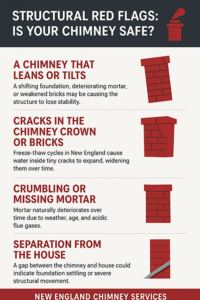 A Chimney That Leans or Tilts